What to Do During a Sewer Backup Before the Plumber Arrives
A sewer backup is one of the most stressful plumbing emergencies a homeowner or business can experience. Wastewater backing up into sinks, toilets, floor drains, or basements creates immediate health risks and can cause extensive property damage in a short amount of time. In a city like Chicago, IL—where aging sewer lines, heavy rainfall, and tree root intrusion are common—sewer backups can happen unexpectedly. Knowing what to do during a sewer backup before the plumber arrives can help minimize damage, protect your safety, and speed up the repair process. This guide walks through the critical steps to take during a sewer backup and explains when emergency plumbing services are required.
Step 1: Stop Using Water Immediately
As soon as you notice a sewer backup, stop all water use in the property. Continuing to run water will worsen the backup by sending more wastewater into an already blocked sewer line. This includes:
- Toilets
- Sinks and faucets
- Showers and tubs
- Dishwashers and washing machines
Even small amounts of water can increase pressure in the sewer line and cause additional overflow. Stopping water usage is the single most important step you can take right away.
Step 2: Avoid Contact With Sewage
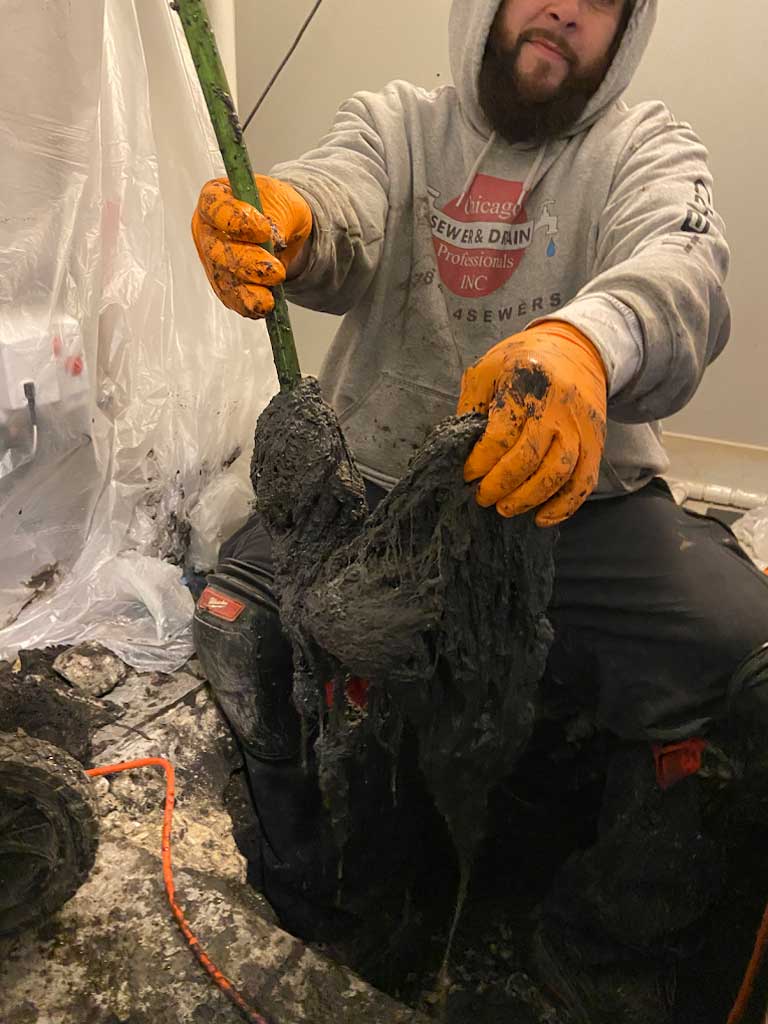
Sewage contains harmful bacteria, viruses, and contaminants that pose serious health risks. Direct contact should be avoided whenever possible. Safety precautions include:
- Keep people and pets away from affected areas
- Avoid touching contaminated water or surfaces
- Do not attempt cleanup without proper protective gear
- Ventilate the area if possible by opening windows
If sewage is present in living or working areas, treat the situation as a health hazard until professional help arrives.
Step 3: Identify the Source of the Backup (If Safe)
If it can be done safely, try to determine where the backup is occurring. This information can be helpful for the emergency plumber when they arrive. Common indicators include:
- Water backing up from floor drains
- Toilets overflowing when other fixtures are used
- Multiple drains affected at the same time
- Sewage odors coming from drains
Backups affecting multiple fixtures often indicate a main sewer line blockage rather than a localized drain issue.
Step 4: Shut Off Electricity in Affected Areas (If Necessary)
If the backup involves standing water near electrical outlets, appliances, or basement equipment, electrical hazards may be present. In these cases, shutting off power to the affected area can help prevent shock or fire risks. Only do this if you can safely access the breaker panel without walking through water. If not, wait for professionals to handle the situation.
Step 5: Protect Your Property From Further Damage
While you should not attempt major cleanup, there are steps you can take to limit damage if it is safe to do so. These include:
- Moving furniture, electronics, and valuables away from affected areas
- Placing towels or barriers to prevent wastewater from spreading
- Keeping doors closed to contain contamination
Avoid using shop vacuums or household equipment to remove sewage, as this can spread bacteria and worsen contamination.
Step 6: Call for Emergency Plumbing Services Immediately
A sewer backup is not a situation that can wait. Emergency plumbing services are required to diagnose the cause, stop the backup, and begin repairs. When calling an emergency plumber, be prepared to describe:
- Where the backup is occurring
- Whether multiple drains are affected
- If sewage has entered living spaces or basements
- Any recent signs of slow drains or recurring clogs
Prompt response reduces damage and shortens recovery time.
Common Causes of Sewer Backups
Understanding what causes sewer backups can help explain why professional service is necessary. Frequent causes include:
- Severe drain clogs and debris buildup
- Tree root intrusion into the sewer line
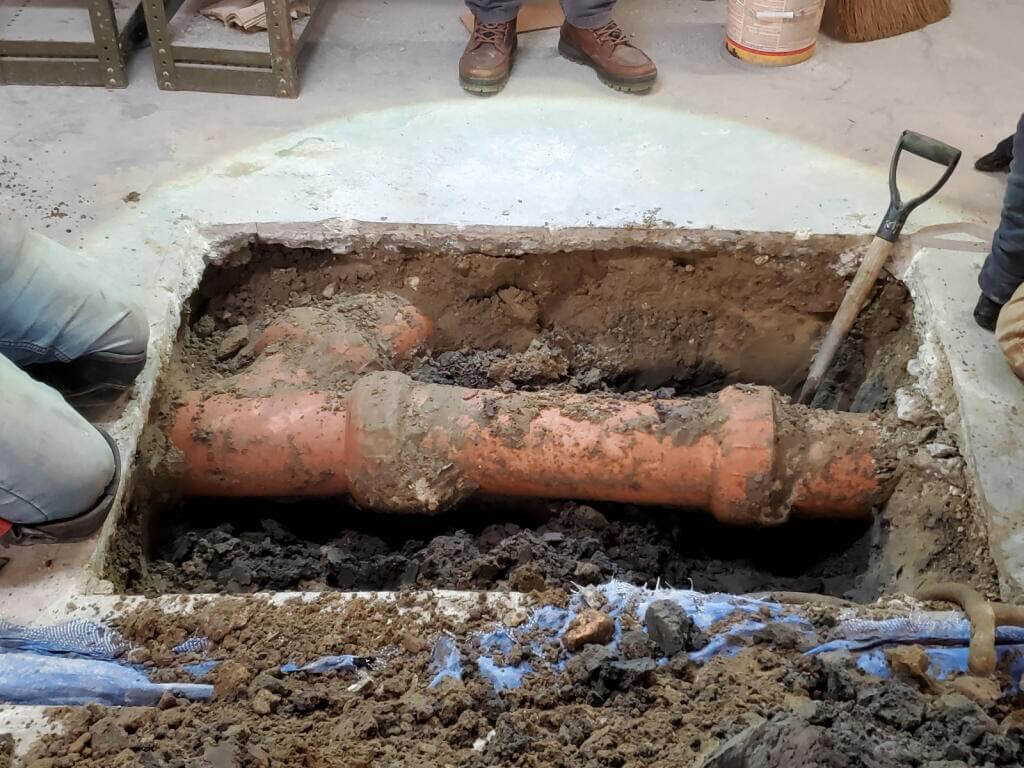
- Collapsed or deteriorated sewer pipes
- Heavy rainfall overwhelming the sewer system
- Grease accumulation in the main line
In many cases, sewer line repair in Chicago, IL, or emergency sewer repair is required to fully resolve the issue.
Why DIY Fixes Are Not Recommended During a Backup
During a sewer backup, DIY attempts can make the situation worse. Chemical cleaners, plungers, or drain snakes are unlikely to clear a main sewer blockage and may increase pressure in the line. Professional drain cleaning in Chicago, IL, and diagnostic tools are required to safely address the problem. In some cases, advanced methods such as hydro jetting drain cleaning are used to remove heavy buildup or root intrusion once the immediate emergency is under control.
Basement Backups and Sump Pump Concerns
In Chicago properties with basements, sewer backups often occur through floor drains. These situations may also involve sump pumps or ejector pumps, especially during heavy rain. If a sump pump or ejector pump fails:
- Groundwater and wastewater may accumulate rapidly
- Flooding risk increases significantly
- Additional repairs may be required
Professional sump pump repair or sump pump installation may be necessary to prevent future incidents once the sewer issue is resolved.
What the Plumber Will Do Upon Arrival
Once emergency plumbing professionals arrive, they will focus on stopping the backup and identifying the root cause. Typical steps include:
- Inspecting the sewer line for blockages or damage
- Using professional drain cleaning equipment
- Performing sewer line repair if needed
- Recommending hydro jetting service for thorough cleaning
- Advising on long-term prevention strategies
If the sewer line is severely damaged, sewer line replacement may be discussed after the emergency is stabilized.
Preventing Future Sewer Backups
After the immediate issue is resolved, preventive maintenance is key to avoiding repeat incidents. Recommended prevention measures include:
- Routine drain cleaning services
- Periodic sewer line inspections
- Hydro jetting for older or high-use sewer lines
- Monitoring sump pumps and ejector pumps
- Avoiding grease and improper waste disposal
For businesses, ongoing commercial sewer service helps reduce the risk of disruptive backups and emergency plumbing calls.
Contact Us for Emergency Sewer and Plumbing Help
A sewer backup is disruptive, hazardous, and overwhelming—but taking the right steps before the plumber arrives can significantly reduce damage and risk. Stopping water use, avoiding contact with sewage, and calling emergency plumbing services immediately are critical actions that protect both people and property. If you are experiencing a sewer backup, do not wait. Immediate professional response is essential to stop the damage and restore safe conditions.Contact us right away for emergency plumbing services in Chicago, IL. Whether you need emergency sewer repair, drain cleaning, sewer line repair, or assistance with sump pumps and ejector pumps, our team is ready to respond and help you regain control of the situation safely and efficiently.